Author: Makenzie Morris
Community Involvement
Published:
Thursday, 01 Jan 2026
Sharing

Looking Back: A Former JA President’s Journey with Junior Achievement
Susan Ploeger
I graduated from the University of Iowa in 1978 and, that same spring, moved to the Quad Cities to begin my first job with Junior Achievement. Little did I know that I would fall in love with the JA mission, the young people it served, and the community surrounding it. What began as my first job became a passionate and rewarding 17-year career.
After serving for two years as the JA Company Manager, followed by managing Project Business, I became President of Junior Achievement of the Quad Cities in 1983, a position I was privileged to hold for 12 years.
When I began working with JA in the late 70s, Junior Achievement was best known for its original after-school evening program. High school students actually organized and operated their own small companies with the guidance of volunteer business advisers. I fondly remember driving from high school to high school in the evenings, visiting the JA companies and getting to know the energetic, entrepreneurial students and their advisers. Trade fairs were also a big part of the experience, often held in local malls where students proudly displayed and sold the products they had created.
During my tenure, Junior Achievement began a major shift toward classroom-based programs, and participation grew exponentially. More schools and educators began partnering with JA and welcoming business professionals into their classrooms to teach students about work readiness, entrepreneurship, financial literacy, and the free-enterprise system. During those years, programs included Business Basics for fifth- and sixth-graders, Project Business for eighth-graders, and Applied Economics for high school students. Eventually, the traditional evening JA Company program was discontinued as classroom programming became the primary focus.
It was also an exciting period of growth for fundraising and community recognition. The first JA Bowl-a-thon and the first JA Golf Tournament were launched during those years, both becoming longstanding annual fundraisers. The Quad Cities Business Hall of Fame, founded through the leadership of Hunt Harris, also became an important tradition, honoring outstanding business leaders whose contributions helped shape our community.
One of my most memorable experiences came in the early 1990s, when I had the opportunity to travel with Vinje Dahl and Hunt Harris to Tallinn, Estonia, to help create an international partnership between Junior Achievement of the Quad Cities and Junior Achievement of Estonia. Estonia had only recently regained its independence following decades of Soviet rule. We shared JA teaching materials and ideas with Estonian business leaders and the program’s newly hired JA staff as they began introducing young people to entrepreneurship, free enterprise and the principles of a market economy. It was an extraordinary experience and one I will always treasure.
After 17 meaningful years with Junior Achievement, I decided it was time for a new chapter, and our family moved to Burlington, Iowa. My husband and I became entrepreneurs ourselves, launching Ploeger Recruiting Services, an executive search firm serving Iowa manufacturers and hospitals. We successfully operated the business for 28 years before retiring three years ago.
Even after leaving my professional role with JA, I remained deeply involved with the organization in Burlington. I helped strengthen the local JA board and volunteered to teach the newly developed elementary school programs. One of my favorite memories was teaching the first-, second-, third-, and fourth-grade JA programs in my youngest daughter's classrooms.
Looking back, I am incredibly grateful for the people who made those years so meaningful. I had the opportunity to work with and learn from dynamic and committed board members, and I was fortunate to be surrounded by a talented staff who worked tirelessly alongside me.
Most of all, I will always be thankful for the hundreds of volunteers who gave their time, energy, and real-world experience to Junior Achievement. They brought the world of business to life for generations of young people throughout the Quad Cities and surrounding communities.
Junior Achievement was much more than a career for me. It helped shape who I became, introduced me to extraordinary people, and gave me the privilege of watching young people discover possibilities for their own futures. I will always be proud and grateful to have been part of it.
A JA Journey: From Student to National Team Member
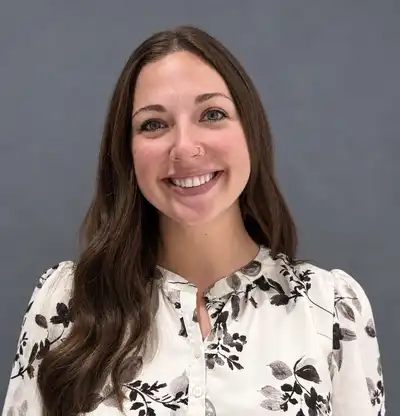
Grace Schebler, JA USA
Junior Achievement was something I looked forward to every year of elementary school. I still remember the volunteers who came into my classroom dressed in business attire and carrying briefcases, and I remember thinking they must be teaching us something really important.
I loved school, so I have a lot of great memories from those years, but one of my favorites was preparing for JA BizTown in fifth grade. I dressed up for my interview, was hired as Town Treasurer, and took the role very seriously. My dad volunteered that day, which made the experience even more memorable. Looking back, it's one of those childhood experiences that stuck with me and ultimately helped shape my career.
Years later, as an elementary teacher in Colorado, I was looking for resources to support personal financial literacy standards and reached out to my local JA office. They connected me with JA learning experiences that I later taught to both my first and fifth-grade students. While the materials had evolved since I was a student, the core purpose was the same: helping students connect what they learn in school to the real world and think more intentionally about their futures.
I'm grateful to be one of the many students whose life was touched by JA. What started for me in a classroom in Davenport eventually came full circle, leading me to a career with JA-Rocky Mountain and now JA USA. I've experienced JA as a student, a teacher, a volunteer, a local staff member, and now a member of the national team. Through every stage, I've seen the same impact: helping young people see opportunities they may not have considered before and giving them the confidence to imagine what's possible. It's pretty special to know that an organization that played such a meaningful role in my childhood continues to influence the work I do today and create those same opportunities for students across the country.
The Opportunity That Sparked a Passion
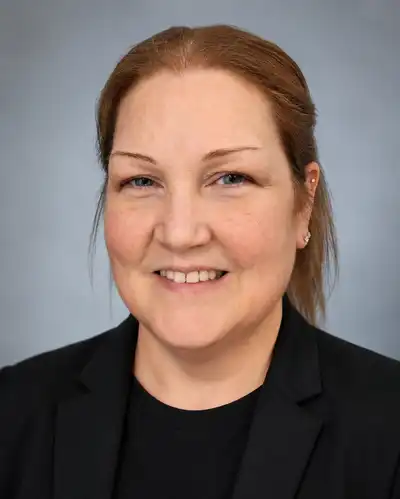
Saree Hahn, JA Volunteer
Teaching kindergartners is where it all started for me.
It was fall, and my son had just started school when his teacher asked if I would be their Junior Achievement (JA) volunteer. That single opportunity eventually led to my love of teaching in the classroom.
Over the past 15 years as a JA volunteer, my passion for teaching children about financial literacy, smart money choices, work readiness, and entrepreneurship has continued to grow. I have taught JA programs at every grade level, and I honestly cannot pick a favorite. Each age group offers something unique and rewarding, making it easy to keep coming back year after year.
I have been blessed to learn from my grandfather and father, both brilliant businessmen who instilled in me the values and skills needed to become a successful and financially savvy businesswoman. My father played a significant role in shaping my career in accounting & leadership without even realizing it.
In my early twenties, I began working at his powder coating company. I started at the bottom as a shop laborer and worked my way up through the company. Along the way, I tried to learn everything I could from him. Those experiences ultimately led me to a successful career in accounting. Hard work and determination are two qualities that have helped me become who I am today, and my father has been an incredible mentor throughout my journey.
On July 15, 2025, I underwent a life-saving medical procedure: a living donor liver transplant made possible by my sister's extraordinary gift. To say my life has changed over the past year would be an understatement.
This journey has given me the opportunity to slow down and reflect on what truly matters. As I focused on healing, I began to realize that my career in finance and accounting might be coming to a close. One unexpected blessing from this experience has been the opportunity to become more involved in my community and dedicate more time to teaching through Junior Achievement.
During the Spring 2026 semester, I taught six JA classes, reaching approximately 140 students. From February through May, I was in the classroom three days each week. As the semester progressed and my final sessions approached, I found myself dreading the end of the school year. I simply was not ready to leave the classroom. For the first time, I began seriously asking myself whether a career change might be possible.
Now, as summer winds down and the start of a new school year approaches, my heart is already smiling. Knowing that I will soon return to the classroom fills me with excitement for the students I will meet and the impact I hope to make.
While I still have a health journey ahead of me and continue working toward a new normal—whatever that may look like—I remain focused on teaching and discovering where this path may lead. I am excited to see what the next year brings. Whether I find myself in the classroom part-time or full-time, I know that education will be part of my future.
My love for children and teaching would never have developed without Junior Achievement. The reward I feel every time I leave a classroom is what keeps drawing me back. The hugs and thank-you notes are simply a bonus.
Looking back, what began as a volunteer opportunity in my son's kindergarten classroom has become a passion, a purpose, and perhaps even the next chapter of my life.
Nearly 30 Years Later, the Mission Still Matters
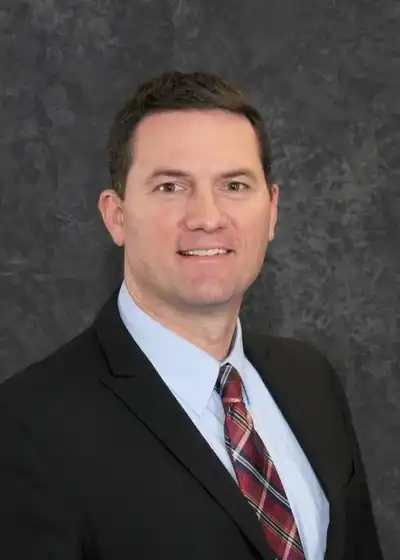
Clint Christopher, Superintendent
I still remember being a brand-new teacher at Virgil Grissom Elementary in Princeton, Iowa, trying to find my footing in the classroom. A couple of the teachers I partnered with already had connections to Junior Achievement, and before long, I found myself pulled into something that would end up sharing nearly three decades of my career. We had JA volunteers coming into our classrooms, and then an opportunity came along that none of us could have fully appreciated at the time – we were invited to be part of a pilot program called Exchange City, what is now known as Junior Achievement BizTown.
Back then, it was still taking shape – literally. There was a location in downtown Davenport where construction was underway, and we were part of the group helping bring the vision to life. We’d meet there, talk through ideas, and then head back to our classrooms to test pieces of the curriculum with our students. I can still picture those early days – bringing students into a space that wasn’t even fully finished yet, watching them step into roles, try things out, and give us feedback without even realizing how important their input was. We were learning alongside them, helping shape something that would impact thousands of kids after them.
As my career progressed, Junior Achievement stayed with me. When I moved to Moline as a principal and later into a district office role, we continued to make JA a priority, ensuring students had access to Exchange City. Then, during my time in the Twin Cities, I saw it from yet another perspective, as JA programs were embedded in the schools there as well. No matter where I went, I kept seeing the same thing — students engaged in real, meaningful learning that connected directly to their futures.
It also became personal. All three of my children had the opportunity to participate in Junior Achievement programs, in different districts and even different states. Watching them go through those experiences reinforced what I had seen professionally — that this work matters.
Now, as superintendent in Muscatine, Iowa, I’m committed to making sure our students have those same opportunities. We’ve worked to ensure that all of our sixth graders can experience Junior Achievement BizTown, because I truly believe in the value of what it offers. And today, serving on the South Region JA Board, I’ve come full circle in a lot of ways.
For me, staying connected to Junior Achievement has always been about what it brings to students. It’s the way it connects classrooms to the community — bringing in volunteers who share real-world experiences. It’s the focus on financial literacy and career readiness, skills our students absolutely need. And with Junior Achievement BizTown especially, it’s the hands-on learning — students managing paychecks, making decisions, working jobs, even figuring out when they can take a lunch break. It’s immersive, it’s engaging and it sticks with them.
As a board member, my role is to help ensure those opportunities continue to grow. That means thinking about how we expand access, supporting fundraising efforts to sustain the programs, and helping guide where we’re headed.
When I look back, it’s remarkable to think that what started as a chance opportunity early in my teaching career has remained such a constant. Across different roles, different districts, and even different states, Junior Achievement has been there — and I’m proud to still be a part of it today.

Teaching, Laughing & Making an Impact: Years of JA in the Classroom
Ashley Dekarske, Merrill Lynch
I’ve had the joy of teaching kindergarten, 1st, 2nd, and 5th grade classes—both JA‑in‑a‑Day and the traditional five‑week format. Most of my time has been spent at Harrison Elementary, though I’ve also volunteered in Iowa City, Walcott, and other Davenport schools. Kindergarten and 1st grade have always held a special place in my heart, and I’ve been fortunate to teach the same classrooms in those grades every year.
One of my favorite moments happens during the 1st grade JA Our Families program, session three. The first vocabulary word is entrepreneur. After reviewing what we learned the week before and chatting with the students about their week, I hold up the vocabulary card and ask, “Who wants to give this word a try?” Their guesses are always creative and enthusiastic.
Once they’ve taken their best shot, I pronounce the word entrepreneur and share the definition. Then I ask, “Does anyone think that sounds like a French word?” The kids usually giggle and nod—and that’s when I lean into my most dramatic, over‑the‑top French accent and shout, “ENTREPRENEUR!” followed by an exaggerated “Oui, oui, oui!” The students always burst into laughter, but the best part is that the teacher laughs every single time. It’s a small moment, but it’s one of my favorites year after year.

From 1997 to 2024: A 30-Classroom Journey with Junior Achievement
Mike Huntley, Group O
"Group O has long been a big supporter of Junior Achievement, and soon after joining the team in August of 1996, I was encouraged to volunteer in the classroom for JA. Giving back to the community I grew up in felt right, and if Group O supported a cause, I did as well.
I don't recall exactly what year I started teaching. It was 1997 or 1998, and I taught an early elementary class at Horace Mann Elementary. I was a little nervous for the first class, but I found it was fairly easy, and JA prepared me with the appropriate resources. Next semester I taught at Edison Junior High with Ms. Erickson, and she made the classes so easy to manage and worked with me at times to help with the lessons. From that point on, every class I taught was with Ms. Erickson. We taught together until 2024 when we both retired. Early on, I sometimes taught fall and spring sessions, so I imagine I have completed 30 or so classes over the years.
I really enjoyed visiting the classroom. The 3rd and 4th graders were always a fun bunch that had little problem engaging, and the JA curriculum allowed me to teach some topics I am passionate about - budgeting, wants/needs, the evil side of credit, etc. The last class of the semester was always bittersweet. Every time I gained more and more appreciation for the tough job our educators have and was thankful for my career in IT! Ms. Erikson always had a batch of thank you cards created by the kids, and they were always a treat to enjoy back at the office. Every once in a while, a student I had previously taught would approach me somewhere in town (like a Rocky game) and say hello, and that never failed to make my heart smile."
Ready, Set, Work! Celebrating 25+ Years of the 7th Grade JA Career Work Day & QCCTEC
QCCTEC Team
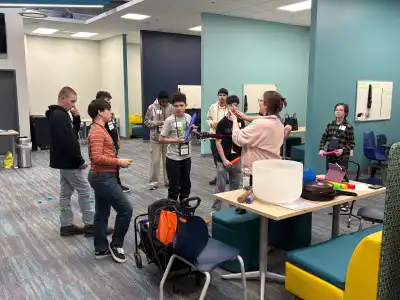
For over 25 years, the Quad City Career & Technical Education Consortium (QCCTEC) and Junior Achievement (JA) have partnered to provide special population students with transformative career exploration. Now led by Special Populations Coordinator Steve Smithers and the QCCTEC team, the annual 7th Grade Career Work Day introduces students to essential workplace skills in a highly supportive environment. This February 2026, 34 students from Wilson Middle, Northeast Junior High, Geneseo Middle, Cambridge Junior High, and Edison Junior High gathered for the event at the JA Inspiration Center in Moline.
The students rotated through immersive, 20-minute career sessions in Animal Care, Delivery and Mail Services, Grocery Store Operations, Banking, and Restaurant Work. Built on an engaging “learning while earning” model, the program empowered students to complete hands-on tasks while mastering vital soft skills like communication, teamwork, customer service, and time management.
Beyond just learning the ropes, the students got to experience the tangible rewards of employment. At the end of their shifts, each student was issued an actual paycheck. To access their funds, they were required to endorse the check with their own signature and take it directly to the center's bank to process. With their hard-earned wages in hand, the students experienced the thrill of financial independence, managing their money to shop for items at makeshift stores created specifically for the event.
The day also featured lunch from Jersey Mike’s and an interactive session with Weinert Music Therapy to foster community and connection. Made possible by dedicated volunteers from QCCTEC, JA, the Quad City Animal Welfare Center, and Weinert Music Therapy, the event was a remarkable success.
After more than two and a half decades, this initiative continues to be a powerful catalyst for personal growth. Students gain invaluable insight into the workforce, leaving the Inspiration Center with newfound confidence, independence, and the inspiration to explore their boundless potential.
Get Involved with Junior Achievement!
Select a button below to see how you or your organization can get involved with Junior Achievement of the Heartland.